


















































Bob Zache was a longtime Arizona resident who had visited and hiked the Grand Canyon many times before taking his first Grand Canyon rafting trip at age 75. He kept a journal of his ten-day oar-powered trip with Grand Canyon Whitewater in May 2011. This story draws from his journal and experiences.
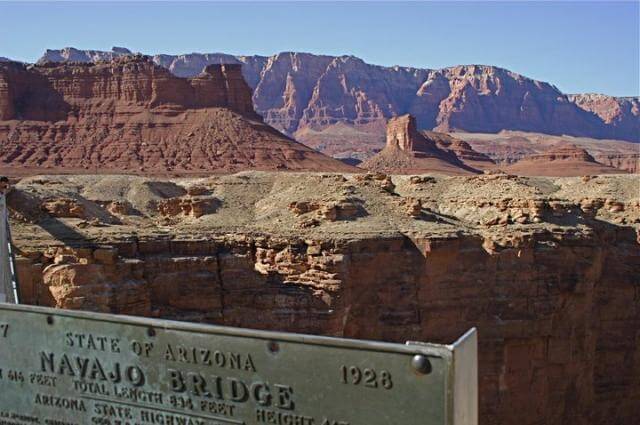
Bob had seen the Grand Canyon from the rim and hiked down to the Colorado River. He had crossed its bridges, studied photographs and heard stories about rafting through it. Now he was about to experience it from a different perspective. “I didn’t really know what to expect on this trip,” he wrote.
That first afternoon, the group pulled onto a sandy beach and began learning the camp routine. Bags came off the boats, cots unfolded, and everyone found a place to sleep. Bob and his friend Mary Lou put up a tent, then chose to sleep outside instead. Like most of our guests, they would spend the rest of the trip under the stars.
After dinner, the sky lit up with stars and the Big Dipper appeared overhead. “Beautiful night with a zillion stars blazing in the black sky,” Bob wrote.
Mornings developed a familiar rhythm: coffee, then breakfast, packing up and helping load the boats via the group duffel line. Getting used to sand is a must since it is in everything! As most guests discover, Bob realized how important protection from the sun is in the canyon. Packing brought another lesson: “I realize I’ve brought two or three times more stuff than I needed.”
Although every day has a similar flow, there is so much to see and do! Eat lunch beneath an enormous overhang at Redwall Cavern and play Frisbee. At Saddle Canyon, wade towards a hidden waterfall. See the brilliant turquoise water at the Little Colorado.
By the middle of the trip, Bob was learning to stop asking what time it was. Mary Lou still wore her watch, and he kept checking with her out of habit. But he could feel that habit loosening. As he put it, “soon we’ll all be on river time and I’ll stop asking.”
At Blacktail Canyon, the group settled onto a shaded shelf of rock. Then a guide arrived with a ukulele and played the blues. The natural acoustics carried music through the narrow canyon while the afternoon passed. Bob noted that the “acoustics in the canyon are phenomenal.”
At Havasu Creek, Bob watched a raven work its way into a guide’s backpack, steal a sandwich and carry it piece by piece to a hole high in the rock. Nearby, people waded, took photographs and sat in the shade.
Then came the big one: Lava Falls. The group pulled over to scout before getting back into the boats. From shore, Bob watched a large raft disappear into water that made it look suddenly small. “It is impressive, and hard to believe our boats are actually going to go through them in just a little while,” he wrote. Soon his own boat entered the noise and waves.
Afterward, there was lunch, another stretch of river and the final camp. The adventure that had once seemed so difficult to picture was almost over.
The next morning brought packing, photographs and goodbyes. “These 21 people, mostly strangers when we started, have become friends in the past 10 days,” he wrote. Leaving them was harder than Bob expected. By the time he was on his way home, he was already missing the river.
Back in his garden, watering vegetables while ordinary life resumed around him, Bob could still feel the motion of the boat. Scenes from the canyon kept returning.
“A week later my dreams at night still revolve around the river.”



-
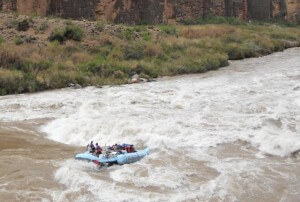
- Grand Canyon Whitewater motor raft enters Lava Falls Rapid, one of the biggies on the Colorado River.



